 By Claire Whitaker
Updated November 2026
Choosing the best bikepacking seat bags comes down to how much gear you carry, how often it rains, and what your saddle and seatpost can physically support. A seat bag sits behind the saddle and holds sleeping gear, clothing, or a bivy setup, so the right size and mounting system matter as much as the fabric. This guide compares five seat bags from the Amazon US listings, judged on capacity range, waterproofing claims, strap and mounting design, and the patterns owners tend to report after months of riding.
Our top picks at a glance
- 1
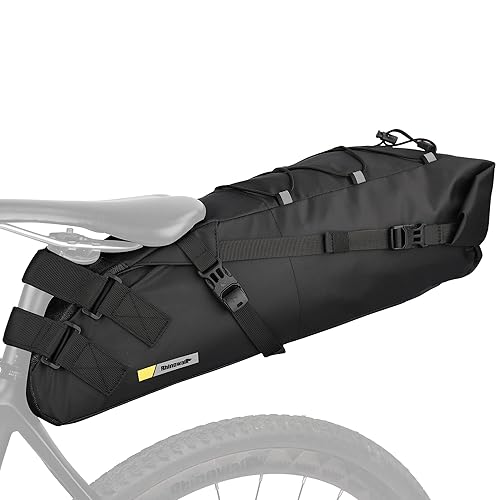 TOP CHOICEBest overallRhinowalk Waterproof Bike Saddle Bag 13L – Under Seat Storage for MounView on Amazon
- 2
 TOP CHOICEBest for expandable loadsAir Release Valve for Compression, PVC Reflective Panels, Fits Road, MView on Amazon
- 3
 TOP CHOICEBest for maximum capacityWaterproof Bike Saddle Bag Large Capacity 15L Bikepacking Bicycle SeatView on Amazon
- 4
 Best for a rigid, stable shapeBikepacking Road Bicycle Rear Pack Under Seat with PVC Reflective PaneView on Amazon
- 5
 Best for wet-weather trips13L Roll-top Bikepacking Saddle Bag, Waterproof Inner Bag, Sealed SeamView on Amazon
Our Top Picks
The five picks below are ordered by how well they fit the criteria most riders care about: capacity that suits typical overnight and multi-day loads, a mounting system that stays put on rough pavement and gravel, and waterproofing that holds up in real weather. No single bag wins every category, so the comparison table and product notes are designed to help you match a bag to your riding.
Quick Comparison
| Product | Best for | Key feature |
|---|---|---|
| Rhinowalk Waterproof Bike Saddle Bag 13L | Most riders on road, mountain and commuter bikes | 13L capacity with a waterproof shell |
| KEMIMOTO Bike Saddle Bag, 13-15L Expandable | Riders whose load size changes from trip to trip | Expandable 13-15L volume |
| Waterproof Bike Saddle Bag Large Capacity 15L | Multi-day trips needing extra room | 15L large-capacity body |
| KEMIMOTO Bike Seat Bag, Expandable 11L | Lighter loads and a stable, structured shape | Bottom hardboards for shape retention |
| 13L Roll-top Bikepacking Saddle Bag | Wet-weather and rain-prone routes | Roll-top closure with waterproof inner bag |
Rhinowalk Waterproof Bike Saddle Bag 13L – Under Seat Storage for Mountain Road Biking and Commuting Trips
Rhinowalk Waterproof Bike Saddle Bag 13L – Under Seat Storage for Mountain Road Biking and Commuting Trips
Best for: Overall versatility for everyday and weekend bikepacking
This is a reasonable first seat bag for riders who want one bag that handles overnight kit and short trips without much fuss. It suits road, mountain and commuter setups where the saddle rails and seatpost clamp leave room for a standard under-saddle mount.
Key specs
- Listed capacity: 13L
- Waterproof bag construction, per the listing
- Designed for under-seat storage on bikes with a standard saddle setup
Pros
- Capacity suits a sleeping bag plus a layer or two for short trips
- Waterproof construction is well suited to light to moderate rain
- Under-seat placement keeps the load compact and away from the rear wheel’s spray zone
Cons
- Fixed 13L volume leaves little room for bulky multi-day loads
- Strap tension needs regular checks on rough surfaces
Bottom line: A sensible default for riders building their first bikepacking kit who want a dependable, mid-size seat bag.
Air Release Valve for Compression, PVC Reflective Panels, Fits Road, MTB, E-Bikes, Touring, Commuter & Gravel Bikes KEMIMOTO Bike Saddle Bag, 13-15L Expandable Waterproof Bikepacking Seat Bag
Air Release Valve for Compression, PVC Reflective Panels, Fits Road, MTB, E-Bikes, Touring, Commuter & Gravel Bikes KEMIMOTO Bike Saddle Bag, 13-15L Expandable Waterproof Bikepacking Seat Bag
Best for: Riders whose load size changes from trip to trip
The expandable design suits people who ride overnight one weekend and a multi-day route the next. Owners of expandable seat bags generally report that the extra volume is most useful when a sleeping bag or extra food is added late in packing.
Key specs
- Listed capacity range: 13-15L when expanded
- Waterproof, per the listing name
- Reflective panel for low-light visibility
Pros
- Expandable volume covers both light and fuller loads
- Reflective panels add visibility on dusk and early-morning rides
- Compression-style design helps keep a loose load from shifting
Cons
- Fully expanded, the bag can sit farther from the saddle than some riders like
- Compression straps need adjusting each time the load changes
Bottom line: The right pick for riders who want one bag to cover light commuting trips and heavier overnight loads.
Waterproof Bike Saddle Bag Large Capacity 15L Bikepacking Bicycle Seat Bag for Road Mountain
Waterproof Bike Saddle Bag Large Capacity 15L Bikepacking Bicycle Seat Bag for Road Mountain
Best for: Multi-day trips needing extra room
When your sleep system, extra clothing and food all need to fit under the saddle, a 15L body gives more margin. This is the bag to consider if your current seat bag regularly feels too tight.
Key specs
- Listed capacity: 15L
- Waterproof bag construction, per the listing
- Designed for road and mountain bikes with a standard seatpost
Pros
- The largest listed capacity among the five picks
- Room for bulkier items like a down quilt or extra food
- Waterproof body suits variable weather on longer routes
Cons
- Bigger bags sway more if loaded unevenly
- Can rub the rear tire or heel on some frame sizes, so check clearance
Bottom line: A strong option for riders carrying more gear on multi-day routes who have confirmed their frame has tire and heel clearance.
Bikepacking Road Bicycle Rear Pack Under Seat with PVC Reflective Panel & Four Bottom Hardboards KEMIMOTO Bike Seat Bag, Expandable 11L Water Resistant Saddle Pouch
Bikepacking Road Bicycle Rear Pack Under Seat with PVC Reflective Panel & Four Bottom Hardboards KEMIMOTO Bike Seat Bag, Expandable 11L Water Resistant Saddle Pouch
Best for: Lighter loads and a stable, structured shape
The bottom hardboards help the bag hold its shape, which many riders prefer because a structured bag tends to sit more predictably and rub less. It suits people carrying a lighter kit who value a tidy profile.
Key specs
- Listed capacity range: 11L expandable
- Four bottom hardboards for shape retention, per the listing
- PVC reflective panel and water-resistant body
Pros
- Bottom hardboards keep the bag from sagging under light loads
- Reflective panel adds visibility
- Smaller profile reduces the chance of heel strike
Cons
- 11L is tight for a full sleep system with food
- Water-resistant rather than fully waterproof, so a dry bag liner is wise in heavy rain
Bottom line: A good match for lightweight overnight trips and riders who want a compact, stable seat bag.
13L Roll-top Bikepacking Saddle Bag, Waterproof Inner Bag, Sealed Seams, Anti-slip Pad, Tail Light Hook, Reflective Rhinowalk Waterproof Bike Saddle Bag 13L TPU Under Seat Bag for Road/MTB
13L Roll-top Bikepacking Saddle Bag, Waterproof Inner Bag, Sealed Seams, Anti-slip Pad, Tail Light Hook, Reflective Rhinowalk Waterproof Bike Saddle Bag 13L TPU Under Seat Bag for Road/MTB
Best for: Wet-weather and rain-prone routes
The roll-top closure and inner waterproof bag are the main reasons to consider this pick. Roll-top designs are widely used in bikepacking because they can be sealed by folding the top down several times, which is more effective against rain than a zipper alone.
Key specs
- Listed capacity: 13L
- Roll-top closure with a waterproof inner bag, per the listing
- Sealed seams, anti-slip pad, tail light hook and reflective elements, per the listing
Pros
- Roll-top closure with an inner waterproof bag adds real rain protection
- Tail light hook makes it easy to add lighting
- Anti-slip pad helps the bag stay put against the saddle
Cons
- Roll-top access is slower than a zipper when you need something mid-ride
- Fixed 13L volume limits very large loads
Bottom line: The best choice among these for riders who expect sustained rain and want layered waterproofing.
Buying Guide
Before buying, it helps to look past the headline capacity and check how the bag will actually mount, load and ride. The factors below cover what to compare.
Capacity and Load Size
Seat bags typically fall into roughly the 10-15 liter range. Start by packing the gear you already own and measuring its volume. A 11-13L bag suits lighter overnight kits, while 15L gives margin for a bulkier sleep system or extra food. Expandable bags let you match volume to the trip.
Good picks for this: KEMIMOTO Bike Saddle Bag, 13-15L Expandable; Waterproof Bike Saddle Bag Large Capacity 15L
Waterproofing and Closure Type
Distinguish between “water-resistant” and “waterproof.” Water-resistant bags shed light spray but may let water in during sustained rain. Roll-top closures sealed several times are generally more effective than zippers alone, and a waterproof inner liner adds a second layer. Keep electronics and sleeping gear in dry bags regardless.
Good picks for this: 13L Roll-top Bikepacking Saddle Bag; Rhinowalk Waterproof Bike Saddle Bag 13L
Mounting and Saddle Compatibility
Check your saddle rails, seatpost diameter and any dropper post. Most seat bags use straps around the rails and seatpost. A saddle with a long, flat rear section mounts more easily. Measure the distance from the saddle rear to the tire so you know how far the bag will protrude.
Good picks for this: KEMIMOTO Bike Seat Bag, Expandable 11L; Rhinowalk Waterproof Bike Saddle Bag 13L
Clearance and Heel Strike
A bag that sits too far back or too wide can rub the rear tire or your heel on the pedal stroke. Check clearance with the bag fully loaded, and turn the handlebars and pedal through a full rotation. Frame size and tire width both affect how much room you have.
Good picks for this: KEMIMOTO Bike Seat Bag, Expandable 11L; KEMIMOTO Bike Saddle Bag, 13-15L Expandable
Stability and Sway
Loads that shift side to side make steering less predictable. Structured bags with bottom hardboards tend to hold their shape, and compression straps reduce movement. Pack heavier items low and close to the saddle, and keep the bag centered on the saddle rails.
Good picks for this: KEMIMOTO Bike Seat Bag, Expandable 11L; KEMIMOTO Bike Saddle Bag, 13-15L Expandable
Visibility and Lighting
Reflective panels help in low light, and a tail light hook lets you mount a rear light where drivers can see it. Pair reflective material with a dedicated light rather than relying on the bag alone.
Good picks for this: 13L Roll-top Bikepacking Saddle Bag; KEMIMOTO Bike Seat Bag, Expandable 11L
Durability and Care
Seat bags take abrasion from the saddle, rails and road grit. Rinse off mud after rides, dry the bag fully before storing it, and check stitching and strap buckles periodically. Owners often report that strap wear is the first thing to fail, so inspect straps as carefully as the fabric.
Good picks for this: Rhinowalk Waterproof Bike Saddle Bag 13L; Waterproof Bike Saddle Bag Large Capacity 15L
FAQ
What size bikepacking seat bag do I need?
For a light overnight kit, 11-13 liters is usually enough. For a full sleep system plus food and clothing, 13-15 liters gives more margin. Pack your gear first, then choose a size that holds it without forcing the zipper or roll-top.
Are seat bags waterproof?
Many are water-resistant, and some are described as waterproof. Roll-top closures and inner liners offer more protection than zippers alone. For reliable wet-weather protection, keep sleeping gear and electronics in separate dry bags inside the seat bag.
Will a seat bag fit my bike?
Most seat bags mount to standard saddle rails and seatposts. Check your saddle rail design and whether you run a dropper post, since some mounts need clearance. Test the fit with the bag loaded to confirm it does not rub the tire or your heel.
Can a seat bag rub my tire or heel?
Yes, especially with larger bags, wide tires or a long-reach frame. Check clearance by turning the handlebars and pedaling through a full rotation with the bag loaded. If you see contact, use a smaller bag or move the load forward.
How do I stop a seat bag from swaying?
Use the compression straps to snug the load, pack heavy items low and close to the saddle, and center the bag on the rails. Structured bags with bottom hardboards sway less than soft, loosely filled ones.
How do I clean and maintain a seat bag?
Rinse mud and grit after rides, let the bag dry completely before storing, and avoid storing it damp. Check the straps and buckles regularly, since they take the most stress. Replace worn straps before they fail on a descent.
Conclusion
The best bikepacking seat bags depend on your load, weather and frame. For most riders starting out, the Rhinowalk Waterproof Bike Saddle Bag 13L is a dependable all-around choice. If your load size varies, the KEMIMOTO 13-15L expandable bag covers both light and fuller trips. Riders carrying bulkier multi-day kit should look at the 15L large-capacity bag, provided their frame has clearance. The KEMIMOTO 11L bag suits lighter, stability-focused setups, and the 13L roll-top bag is the strongest option when rain is the main concern. Confirm clearance and mounting on your own bike before you ride long distances.
Sources
- Consumer product safety guidance on reflective and visibility features for bicycle accessories (cpsc.gov)
- Bicycle safety and visibility recommendations for riders on public roads (nhtsa.gov)
Related reading
- Bikepacking Top Tube Bag: 7 Best Picks Compared (2026)
- Best Handlebar Bags Bikepacking: 6 Styles and Sizes Compared (2026)
- 7 Best Fork Bags for Bikepacking: Our Picks Compared (2026)
- 6 Best Handlebar Bags for Bikepacking Picks Compared (2026)
About Claire Whitaker
Claire Whitaker is part of our editorial team and reviews and edits our bike touring & bikepacking guides, checking product details against manufacturer specifications and owner feedback.