 By Caleb Morgan
Updated November 2026
Choosing a GPS for bike touring means balancing battery life, map quality, turn-by-turn routing and how well a unit holds up to rain and rough handling. The six devices below were compared using manufacturer specifications, brand reputation and common owner feedback patterns. Each one is aimed at a slightly different rider, from someone who wants simple track following to someone who wants full map navigation and smartphone-style alerts. We did not test these units ourselves; the comparison is based on published specs and the kinds of experiences owners tend to describe.
Our top picks at a glance
- 1
 TOP CHOICEBest overallGarmin Edge Explore 2, Easy-to-Use GPS Cycling NavigatorView on Amazon
- 2
 TOP CHOICEBest for route planning on a budgetGEOID CC700 Pro 2.8" Color Touchscreen GPS Bike ComputerView on Amazon
- 3
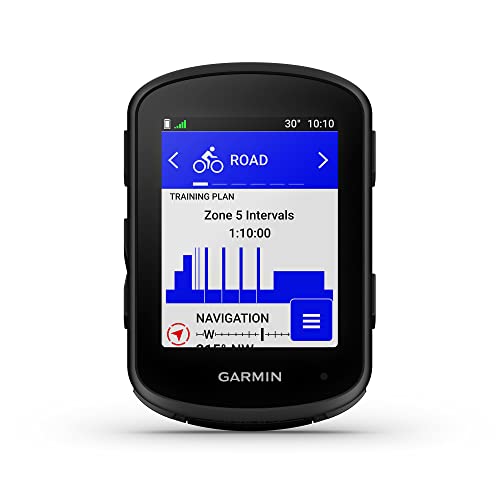 TOP CHOICEBest for compact mountingGarmin Edge 840, Compact GPS Cycling ComputerView on Amazon
- 4
 Best for voice navigationiGPSPORT BSC500 GPS Bike Computer, 3.3'' Touch Screen MAP Voice NavigationView on Amazon
- 5
 Best for smartphone-style alertsFUYU Bike Computer GPS Wireless, 1.43" AMOLED Touchscreen 850 NitsView on Amazon
- 6
 Best for minimalist trackingCYCPLUS G1 Pocket-Size Bicycle Speedometer Odometer GPS Bike ComputerView on Amazon
Our Top Picks
Quick Comparison
| Product | Best for | Key feature |
|---|---|---|
| Garmin Edge Explore 2 | Route-focused touring with map navigation | Dedicated cycling navigator with turn-by-turn directions |
| GEOID CC700 Pro | Riders who want map navigation and route re-planning | 2.8-inch color touchscreen with re-route planning |
| Garmin Edge 840 | Riders who want a compact unit with full GPS features | Compact GPS cycling computer |
| iGPSPORT BSC500 | Riders who prefer spoken directions | 3.3-inch touch screen with map voice navigation |
| FUYU AMOLED Bike Computer | Riders who want phone alerts and Google Maps directions | 1.43-inch AMOLED screen with Google Maps turn-by-turn |
| CYCPLUS G1 | Riders who want light, simple tracking | Lightweight wireless GPS bike computer with long battery life |
Garmin Edge Explore 2, Easy-to-Use GPS Cycling Navigator
Garmin Edge® Explore 2, Easy-to-Use GPS Cycling Navigator
Best for: Route-focused touring with map navigation
This is a good fit for riders who plan routes in advance and want clear turn-by-turn prompts on a dedicated screen rather than a phone. It suits multi-day tourers who need reliable navigation on unfamiliar roads.
Key specs
- Dedicated cycling navigator form factor
- Turn-by-turn route guidance
- Designed for bike mounting
Pros
- Built specifically for cycling navigation rather than general use
- Route-following is straightforward for planned tours
- Well-established brand with a broad range of mounts and accessories
Cons
- Map detail is more limited than full touchscreen units
- Battery life on long navigation sessions is a common concern for owners
Bottom line: A strong default choice for tourers who want a dedicated, well-supported navigator for planned routes.
GEOID CC700 Pro 2.8″ Color Touchscreen GPS Bike Computer
GEOID CC700 Pro 2.8" Color Touchscreen GPS Bike/Cycling Computer, Map Navigation with Re-Route Planning, WiFi Auto-Sync, ANT+/Bluetooth, Message Notification, IPX7 Waterproof, Free Indoor Training
Best for: Riders who want map navigation and route re-planning
This suits riders who go off-plan often and want the unit to recalculate when they take a wrong turn. The color touchscreen makes map browsing easier than a monochrome display.
Key specs
- 2.8-inch color touchscreen
- Map navigation with re-route planning
- ANT+ and Bluetooth connectivity
- IPX7 water resistance rating as listed
Pros
- Re-routing helps when detours happen on the road
- Color touchscreen offers more map context
- Connectivity options cover common sensors and phone pairing
Cons
- Newer model with a shorter track record than long-established brands
- Touchscreen use with cold or wet gloves can be frustrating for some riders
Bottom line: Best for riders who want a feature-rich map unit and are comfortable with a newer brand.
Garmin Edge 840, Compact GPS Cycling Computer
Garmin Edge 840, Compact GPS Cycling Computer
Best for: Riders who want a compact unit with full GPS features
This is a good match for riders who want a smaller head unit that is still a full cycling computer. It works well for those who like tidy handlebar setups and do not need a very large screen.
Key specs
- Compact GPS cycling computer design
- Standard Garmin cycling ecosystem and mounts
Pros
- Small footprint keeps handlebars uncluttered
- Strong brand support and third-party mount options
- Reliable GPS tracking for ride logging
Cons
- Smaller screen limits map detail on complex routes
- Full feature set can take time to learn
Bottom line: A good pick for riders who value a compact layout and solid GPS tracking over a large map display.
iGPSPORT BSC500 GPS Bike Computer, 3.3” Touch Screen MAP Voice Navigation
iGPSPORT BSC500 GPS Bike Computer, 3.3'' Touch Screen MAP Voice Navigation | Climb Training Ebike Function Yaw Replan Connect with Radar Light Sync with Strava Bluetooth ANT+ Wireless Bicycle Computer
Best for: Riders who prefer spoken directions
This suits riders who want to keep their eyes on the road and rely on voice prompts for turns. The larger 3.3-inch touch screen also helps with map viewing at a glance.
Key specs
- 3.3-inch touch screen
- Map display with voice navigation
Pros
- Voice navigation reduces screen checking
- Large screen is easier to read than smaller units
- Map-based routing suits planned touring
Cons
- Less established brand presence in some US retail channels
- Voice prompts can be hard to hear in heavy traffic or wind
Bottom line: A solid choice for riders who want audible turn cues and a larger display.
FUYU Bike Computer GPS Wireless, 1.43″ AMOLED Touchscreen 850 Nits
FUYU Bike Computer GPS Wireless, 1.43" AMOLED Touchscreen 850 Nits, Google Maps Turn-by-Turn Navigation, Call & Text Alerts, IP69K, Dual Mounts, Speedometer Odometer for Bicycle Motorcycle E-Bike
Best for: Riders who want phone alerts and Google Maps directions For a deeper look, 5 Best Bike Touring Panniers Compared: Picks for Long Tours (2026) covers this in detail.
This fits riders who already rely on Google Maps and want similar directions on the handlebars, along with call and text alerts. The AMOLED screen is designed for bright outdoor reading.
Key specs
- 1.43-inch AMOLED touchscreen
- Google Maps turn-by-turn navigation as listed
- Dual mounts included as listed
- IP69K rating as listed
Pros
- Familiar Google Maps interface for directions
- Bright display is useful in sunlight
- Dual mounting options add flexibility
Cons
- Small screen makes detailed map reading harder
- Phone pairing and app setup take some initial effort
Bottom line: Good for riders who want phone-style alerts and familiar mapping on a compact display.
CYCPLUS G1 Pocket-Size Bicycle Speedometer Odometer GPS Bike Computer
CYCPLUS Wireless GPS Bike Computer G1, 70g, 2.0" Screen, IPX6, 1200mAh | Pocket-Size, Bicycle Speedometer Odometer with Automatic Backlight, >55h Working Time, Provide Professional Data Analysis
Best for: Riders who want light, simple tracking
This suits riders who mainly want distance, speed and route recording without heavy map features. Its small size and light weight make it easy to mount and forget.
Key specs
- Weight listed as 70 g
- 2.0-inch screen
- IPX6 rating as listed
- 1200 mAh battery as listed
Pros
- Very light and compact
- Long working time listed for a small unit
- Budget-friendly option for basic tracking
Cons
- Small screen and limited map capability
- Not designed for full turn-by-turn navigation on complex routes
Bottom line: A practical choice for tourers who only need tracking and data, paired with paper maps or a phone for navigation.
Buying Guide
Navigation Style: Map Display vs. Turn-by-Turn vs. Track Following
Decide how you want to be guided. Full map units show terrain and nearby services, turn-by-turn units give step prompts, and track-following units simply show the line you loaded. For long tours, map display helps with resupply planning.
Good picks for this: Garmin Edge Explore 2, GEOID CC700 Pro
Battery Life and Charging
Navigation drains batteries faster than simple logging. Check the manufacturer’s stated navigation runtime, and plan to carry a USB power bank for multi-day stretches. Many touring riders charge the unit at camp or in town each evening.
Good picks for this: Garmin Edge 840, CYCPLUS G1
Screen Size and Readability
A larger screen makes maps easier to read but adds size and weight to the handlebars. Look at whether the display is viewable in direct sunlight, which matters for daytime riding.
Good picks for this: iGPSPORT BSC500, FUYU AMOLED Bike Computer
Mounting and Handlebar Fit
Measure your handlebar diameter and check whether the unit includes multiple mounts. Compact units leave room for bar bags and lights, while larger screens need a stable mount that will not wobble on rough roads.
Good picks for this: Garmin Edge 840, FUYU AMOLED Bike Computer
Weather and Durability Ratings
Check the stated water-resistance rating, such as IPX6 or IPX7, and understand what it covers. Ratings describe resistance to water exposure under specific test conditions and do not mean the unit is suited to submersion or hard impacts.
Good picks for this: GEOID CC700 Pro, CYCPLUS G1
Connectivity and Phone Pairing
Bluetooth and ANT+ support lets you pair heart rate monitors, cadence sensors and your phone. Phone pairing is useful for alerts and sometimes for map updates, so confirm which apps the unit supports.
Good picks for this: GEOID CC700 Pro, FUYU AMOLED Bike Computer
Map Updates and Route Planning
Check how maps are loaded and updated, and whether you can plan routes on a computer or app before departure. Offline map availability matters in rural areas where cell coverage is weak.
Good picks for this: Garmin Edge Explore 2, iGPSPORT BSC500
FAQ
Do I need a dedicated GPS unit for bike touring?
Not always. Many riders use a phone with an offline map app. A dedicated unit adds battery life, weather resistance and a screen that stays on the handlebars, which many touring riders find useful on long days.
How long does a bike GPS battery last on navigation?
Runtime varies by model, screen brightness, GPS settings and temperature. Check the manufacturer’s stated figure and plan on carrying a power bank for multi-day trips.
Can a bike GPS work without cell service?
Many units use satellite positioning, which does not need cell coverage. Map data, though, must be stored on the device in advance. Download the maps for your route before you leave.
What is the difference between turn-by-turn and track following?
Turn-by-turn gives directional prompts at junctions. Track following shows your position on a line you loaded, and you decide where to turn. Turn-by-turn is easier for unfamiliar roads, while track following works well for experienced riders.
Should I mount the GPS on the handlebars or the stem?
Handlebar mounting is the most common choice because the screen stays in view. Make sure the unit does not block your brake levers, lights or bell, and check that it stays secure over rough pavement.
Is a bike GPS waterproof enough for rain touring?
Check the stated IP rating, which describes resistance to water and dust under defined conditions. For prolonged heavy rain, a protective cover or a bag mount is a sensible addition.
Conclusion
For most touring riders, the Garmin Edge Explore 2 is a strong starting point because it is built for cycling navigation and fits planned routes well. Riders who want a larger map on a budget-conscious setup may prefer the GEOID CC700 Pro, while those who want a compact layout will find the Garmin Edge 840 easy to live with. Riders who rely on spoken directions should look at the iGPSPORT BSC500, and those who want phone-style alerts and Google Maps directions should consider the FUYU AMOLED unit. For simple distance and speed tracking with minimal weight, the CYCPLUS G1 covers the basics. Always pair any device with a paper map or offline backup, since electronics can fail on the road.
For broader planning, see Navigation for Bike Touring: GPS, Maps and Backups and Best 10 Bike GPS Computers for Bike Touring Navigation, which cover backup strategies and a wider set of options.
Sources
- Guidance on trail navigation, maps and safety in backcountry and rural travel (nps.gov)
- Information on wireless devices, emergency alerts and cell coverage considerations (fcc.gov)
- Resources on touring routes, safety and bicycle travel planning
Related reading
- Touring Bike Bags: Panniers, Trailers and Frame Bags
- Pre-Ride Inspection for Touring Bikes
- Common Touring Bike Repairs on the Road
- Choosing a Touring Bike: Features That Matter
- Yamaha Sports Touring Bike Guide: How to Choose the Right Model
- Wheels for Touring Bike: How to Choose the Right Setup (Step-by-Step)
About Caleb Morgan
Caleb Morgan is part of our editorial team and reviews and edits our bike touring & bikepacking guides, checking product details against manufacturer specifications and owner feedback.