 By Caleb Morgan
Updated November 2026
Planning france self-guided bike tours means choosing between route books, regional guides and race-themed travel books, and each one solves a different problem. Some give you day-by-day itineraries with stops and mileage. Others focus on a single region, or on the atmosphere of the Tour de France. This comparison looks at five titles on the criteria that matter most to a self-guided rider: how much routing detail they offer, whether the routes suit touring pace, how practical the logistics advice is, and whether the book is current enough to be useful. Ratings and sales figures are left out on purpose, since they change quickly and do not tell you much about fit.
Our top picks at a glance
- 1
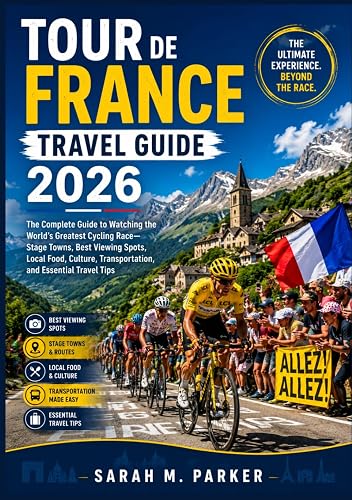 TOP CHOICEBest overallTour de France Travel Guide 2026: The Complete Guide to Watching the WView on Amazon
- 2
 TOP CHOICEBest for planning multi-day routesFrance by Bike: 14 Tours Geared for DiscoveryView on Amazon
- 3
 TOP CHOICEBest for race-watching tripsGraham Watson's Tour De France Travel GuideView on Amazon
- 4
 Best for independent touring routesCycle Touring in France: Eight selected cycle toursView on Amazon
- 5
 Best budget pick for a daily logGrand Tour Cycliste France: Carnet de suivi quotidien sur 3 ansView on Amazon
Our Top Picks
Quick Comparison
| Product | Best for | Key feature |
|---|---|---|
| Tour de France Travel Guide 2026 | Race-season visitors | Stage towns, viewing spots and transport tips |
| France by Bike: 14 Tours Geared for Discovery | Planning multi-day routes | Fourteen themed tour routes |
| Graham Watson’s Tour De France Travel Guide | Race-watching trips | Guide focused on following the race |
| Cycle Touring in France | Independent touring routes | Eight selected cycle tours |
| Grand Tour Cycliste France trip journal | Logging a long ride | Three-year daily log format |
Tour de France Travel Guide 2026: The Complete Guide to Watching the World’s Greatest Cycling Race
Tour de France Travel Guide 2026: The Complete Guide to Watching the World's Greatest Cycling Race—Stage Towns, Best Viewing Spots, Local Food, Culture, Transportation, and Essential Travel Tips
Best for: Planning a trip around the race itself
This book suits riders who want to combine a self-guided route with time at stage towns and roadside viewing spots. It is written for travelers who plan their days around the peloton, so expect more on logistics, food and getting between locations than on pure route cues.
Key specs
- Current edition for the 2026 season
- Covers stage towns, viewing spots, local food, culture and transportation
- Includes essential travel tips
Pros
- Up-to-date with the current race calendar
- Useful transport and timing advice for crowded race days
- Good context on regional food and culture along the route
Cons
- Built around race logistics rather than touring routes with mileage
- Limited value once the race season has passed
Bottom line: Best for riders timing a trip to coincide with the Tour and wanting practical planning help.
France by Bike: 14 Tours Geared for Discovery
France by Bike: 14 Tours Geared for Discovery
Best for: Planning multi-day routes across several regions
This is a route-first book. It suits riders who want a set of ready-made tours they can adapt, rather than a general travel guide. Because it covers fourteen tours, it works well as a starting point when you are still deciding where to ride.
Key specs
- Fourteen themed tours
- Organized around discovery of French regions
Pros
- Multiple route options in one volume
- Good for comparing regions before committing
- Route structure lends itself to self-guided planning
Cons
- Route details may need updating for current road conditions and accommodation
- Less focus on race-season logistics
Bottom line: A strong pick for riders who want several route ideas to choose from before building their own itinerary.
Graham Watson’s Tour De France Travel Guide
Graham Watson's Tour De France Travel Guide
Best for: Trips built around following the race
Graham Watson is known for his photography of professional cycling, and this guide reflects that interest in the race as an event. It is best for riders who want to ride part of the course or plan around race days, with a focus on the atmosphere along the way. Worth reading next: Guided E Bike Tours: 5 Best Options for Scenic Routes in 2026.
Key specs
- Travel guide focused on the Tour de France
- Written with a cycling-fan perspective
Pros
- Strong sense of the race culture and roadside experience
- Useful for timing rides around stage finishes
- Appeals to riders who follow professional cycling
Cons
- Older edition, so check current stage towns and access points
- Less detail on self-guided touring routes than dedicated route books
Bottom line: Pick this if the race itself is the main reason for the trip and you want more atmosphere than route data.
Cycle Touring in France: Eight selected cycle tours
Cycle Touring in France: Eight selected cycle tours
Best for: Independent touring routes with a set pace
This title is built around eight selected tours, which makes it a practical choice for riders who want complete routes they can follow without much adjustment. It fits riders who plan to carry their own gear and set their own daily distances.
Key specs
- Eight selected cycle tours
- Focused on touring rather than racing
Pros
- Complete route structure for each tour
- Suits independent riders who want to self-navigate
- Covers a range of French landscapes
Cons
- Fewer routes than a larger anthology
- Route information may be dated, so verify before departure
Bottom line: A good fit for riders who want a few well-defined routes they can execute on their own schedule.
Grand Tour Cycliste France: Carnet de suivi quotidien sur 3 ans
GRAND TOUR CYCLISTE FRANCE: CARNET DE SUIVI QUOTIDIEN SUR 3 ANS¦ CARNET DE BORD DE CYCLISME ¦ LIVRE ACTIVITÉS DE VÉLO ¦ DECOUVERTE DE LA FRANCE A VELO (French Edition)
Best for: Logging daily rides over a long period
This is a French-language log book rather than a route guide. It suits riders who want to record their daily cycling in France across several seasons, and who read French comfortably. It is not a substitute for route planning, but it adds a personal record to any trip.
Key specs
- Three-year daily tracking format
- Written in French
Pros
- Simple format for recording distance and notes
- Good keepsake for a long-term riding project
- Low-cost option within the budget category
Cons
- Contains no route information or maps
- French-language only, which limits use for some readers
Bottom line: Choose this as a companion log for your ride, not as your main planning resource.
Buying Guide
Route detail and mileage
Check whether the book lists distances, elevation gain and daily stops. Self-guided riders need these to decide whether a day is realistic. Route cues that name roads and towns are more useful than general descriptions of scenery.
Good picks for this: France by Bike: 14 Tours Geared for Discovery; Cycle Touring in France
Currency of information
Road surfaces, accommodation and transport change over time. Look at the publication year and whether the book is a current edition. Older guides can still help with the overall geography, but verify specific stops and bike-friendly lodgings before you ride.
Good picks for this: Tour de France Travel Guide 2026; Graham Watson’s Tour De France Travel Guide
Race-season relevance
If you plan to ride during the Tour de France, you need timing, stage town and transport information. If you are touring outside race season, that content adds little. Match the book to your travel dates.
Good picks for this: Tour de France Travel Guide 2026; Graham Watson’s Tour De France Travel Guide
Language
Most route guides are in English, but some journals and regional titles are French-only. If you are not comfortable reading French, check the listing language before buying.
Good picks for this: Cycle Touring in France; France by Bike: 14 Tours Geared for Discovery
Tour length and pace
Multi-day touring usually involves 40 to 80 miles per day depending on fitness and luggage, though many riders set their own limits. A book with routes split into manageable daily stages is easier to adapt than one with long single-day rides.
Good picks for this: France by Bike: 14 Tours Geared for Discovery; Cycle Touring in France
Format and portability
Consider whether you want a compact book to carry on the bike or a larger reference to read at home. Photocopying or saving key pages to a phone can help if you carry a heavy volume.
Good picks for this: Grand Tour Cycliste France trip journal; Cycle Touring in France
Your own record-keeping
A daily log helps you track distances, weather and places for future trips. It is a useful supplement to a route guide rather than a standalone planning tool.
Good picks for this: Grand Tour Cycliste France trip journal
FAQ
What should I look for in a france self-guided bike tours guide?
Look for route cues, daily distances, elevation information and stops for food and lodging. Check the publication year, since roads and accommodation change.
Do I need a book if I plan to use a phone app?
Many riders combine both. A book gives you an overview of regions and routes, while a navigation app handles turn-by-turn directions on the day. For another angle, check out Top 5 Bike Tours to Leh Ladakhs: Routes, Books and Planning Picks.
Is a Tour de France guide useful outside race season?
Partly. It can help with regional context and stage towns, but race-specific timing and transport advice will not apply once the race is over.
Are these books suitable for beginners?
Route-focused books with daily distances are the most useful for beginners. Pick a route that matches your fitness and experience, and check elevation before committing.
How far should I plan to ride each day?
This depends on fitness, luggage and terrain. Many self-guided tourists plan shorter days in hilly areas and adjust based on weather and how they feel. A route book with split stages makes this easier.
Should I rely only on printed guides?
Carry a backup. Roads close, accommodation changes and signage can be incomplete. Pair printed material with a current map or navigation tool.
Can I ride in France without speaking French?
Yes, many tourist areas are comfortable for English speakers, but learning basic phrases for ordering food and asking directions helps. A French-language book is only needed if you plan to read it.
Conclusion
For most riders planning france self-guided bike tours, a route-focused book is the best starting point. France by Bike: 14 Tours Geared for Discovery suits those comparing several routes, and Cycle Touring in France fits riders who want a few complete tours to follow. If your trip is built around the race, the Tour de France Travel Guide 2026 covers timing and logistics most directly, while Graham Watson’s guide offers more atmosphere. The Grand Tour trip journal works best as a companion for recording your rides rather than planning them.
For related planning help, see Bike Tours France Loire Valley: A Route Guide for Planning Your Ride, Provence France Bike Tours: A Route Guide With Miles, Climbs and Tips, Where to Stay on a Bike Tour: Camping, Hosts, Hotels, and Planning a Bike Tour: Route, Distance and Stops.
Sources
- Guidance on trip planning, route safety and outdoor travel preparation (nps.gov)
- Advice on hydration, heat and sun protection during long rides (cdc.gov)
- General guidance on working safely in outdoor conditions (osha.gov)
Related reading
- Top 6 Self Guided Bike Tours Worth Considering in 2026
- Self Guided Italy Bike Tours: A Route Atlas Guide With Miles and Tips
About Caleb Morgan
Caleb Morgan is part of our editorial team and reviews and edits our bike touring & bikepacking guides, checking product details against manufacturer specifications and owner feedback.