 By Claire Whitaker
Updated November 2026
Shopping for revelate designs bikepacking bags can be confusing, because the category covers everything from tiny stem pouches to large under-seat packs and custom-fit frame bags. This list compares five bags that span that range. Each was selected on specifications, brand reputation for bikepacking gear, and recurring themes in owner feedback about fit, waterproofing, mounting and capacity. None of these were tested by us, so treat the specs below as manufacturer-stated figures and check them against your own bike before ordering.
Our top picks at a glance
- 1
 TOP CHOICEBest overallTouring Road Bike Full Frame BagView on Amazon
- 2
 TOP CHOICEBest for small framesRhinowalk Bike Triangle Frame BagView on Amazon
- 3
 TOP CHOICEBest for snacks and bottlesBike Stem BagView on Amazon
- 4
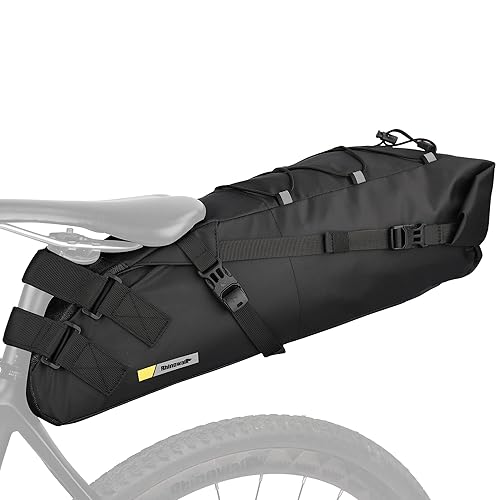 Best for seat-post carryRhinowalk Waterproof Bike Saddle Bag 13LView on Amazon
- 5
 Best budget pickBlackburnOutpost Carryall BagView on Amazon
Our Top Picks
Quick Comparison
| Product | Best for | Key feature |
|---|---|---|
| Touring Road Bike Full Frame Bag | Loaded touring frames with a full triangle | Three listed sizes: 6.5L, 12L and 14L |
| Rhinowalk Bike Triangle Frame Bag | Small frames and MTBs with tight tubes | Slim fit, IPX4 water resistance |
| Bike Stem Bag | Food, snacks and quick-access items | Insulated pouch format |
| Rhinowalk Waterproof Bike Saddle Bag 13L | Bulky gear such as sleeping bags and clothing | 13L under-seat capacity |
| BlackburnOutpost Carryall Bag | Riders who want a simple, versatile carry bag | Single one-size design |
Touring Road Bike Full Frame Bag
Touring Road Bike Full Frame Bag | Bicycle Bikepacking, Touring, Commuting Pack | Small (6.5L), Medium (12L), Large (14L)
Best for: Loaded touring and bikepacking on road or gravel frames with a full triangle.
This suits riders who carry a lot of gear and want to use the main triangle space. Full frame bags are a common choice for tourers who want weight centered low and forward, though fit depends heavily on your top tube and down tube lengths.
Key specs
- Listed in three sizes: Small (6.5L), Medium (12L), Large (14L)
- Designed for bicycle touring, bikepacking and commuting
Pros
- Multiple sizes let you match capacity to your frame
- Uses the main triangle for dense, heavy items
- Works across touring, bikepacking and commuting
Cons
- Requires measuring your frame carefully before buying
- Can interfere with bottle cage mounts on some frames
Bottom line: A strong pick for riders with a standard-sized diamond frame who want the most storage without a rack.
Rhinowalk Bike Triangle Frame Bag
Rhinowalk Bike Triangle Frame Bag Waterproof IPX4 Slim Fit Cycling Storage Pouch for MTB & Road Bikes (Size 1.7L)
Best for: Small frames and mountain or road bikes where space is tight.
This bag is built for riders who need a little extra room for tools, snacks or a spare tube without giving up bottle mounts. Its slimmer profile makes it a sensible choice for smaller triangles.
Key specs
- Listed capacity: 1.7L
- Listed as waterproof with IPX4 water resistance
- Marketed for MTB and road bikes
Pros
- Slim fit suits smaller frame triangles
- Leaves room for most bottle cages
- Low cost of entry for a first frame bag
Cons
- Capacity is limited for multi-day loads
- IPX4 resistance is splash protection, not full submersion protection
Bottom line: Best for riders on smaller frames or shorter trips who want a compact triangle bag.
Bike Stem Bag
Bike Stem Bag | Bikepacking Food Snack Water Bottle Storage | Bicycle Touring Commuting Insulated Pouch
Best for: Food, snacks and items you want within reach while riding.
A stem bag sits on the handlebar stem and keeps frequently used items accessible. It is most useful for day rides, commuting or as a supplement to a larger setup.
Key specs
- Insulated pouch design for food and drink storage
- Marketed for bikepacking, touring and commuting
Pros
- Easy access to snacks without stopping
- Insulation helps keep food cool for a short period
- Small footprint does not affect steering much
Cons
- Limited capacity for anything beyond food and small items
- Stem mounting can interfere with some cockpit layouts
Bottom line: A useful add-on for riders who want quick snack access rather than a primary carry solution.
Rhinowalk Waterproof Bike Saddle Bag 13L
Rhinowalk Waterproof Bike Saddle Bag 13L – Under Seat Storage for Mountain Road Biking and Commuting Trips
Best for: Bulky, lightweight gear such as sleeping bags, clothing and a bivy.
Under-seat bags are the most common storage choice for bikepackers because they keep weight low and centered. This 13-liter model is aimed at riders who need a compact but generous sleep and clothing system.
Key specs
- Listed capacity: 13L
- Listed as waterproof, under-seat design
- Marketed for mountain, road and commuting use
Pros
- Good capacity for a sleeping bag and clothing
- Keeps weight low and away from the handlebars
- Waterproof design suits variable weather
Cons
- Requires a compatible seat post and clearance for heel strike
- Sway can increase if the load is not balanced
Bottom line: A solid choice for riders building a standard bikepacking kit around a sleep system.
BlackburnOutpost Carryall Bag
BlackburnOutpost Carryall Bag Outpost Carryall Bike Bag (Black, One Size)
Best for: Riders who want a simple, versatile carry bag for commuting and light touring.
This is a straightforward, one-size bag suited to riders who want a single accessory for groceries, a laptop or overflow gear. It is less specialized than the frame and saddle options above.
Key specs
- Single one-size design (black)
- Marketed for carrying gear on the bike
Pros
- Versatile use beyond bikepacking
- Simple design with no complicated mounting
- Good as a secondary bag for daily errands
Cons
- Not purpose-built for frame or saddle mounting
- Capacity and waterproofing are not clearly specified in the listing
Bottom line: Pick this if you want a flexible, no-frills carry bag rather than a dedicated bikepacking system.
Buying Guide
Mounting Style: Frame, Saddle, Stem or Handlebar
Most bikepacking bags mount in one of four places, and each affects handling differently. Frame bags sit inside the triangle and keep weight central. Saddle bags sit behind the seat and suit bulky, light items. Stem bags keep snacks within reach. Check whether your frame has bottle mounts you need to keep free before choosing a frame bag, and whether your seat post can carry a saddle harness.
Good picks for this: Touring Road Bike Full Frame Bag, Bike Stem Bag
Capacity and Sizing
Capacity is listed in liters, but volume alone does not tell you whether gear will fit. Measure your frame’s top tube, down tube and seat tube, then compare them with the bag’s listed dimensions. Bags sized in tiers, like the full frame bag listed in small, medium and large, make it easier to match gear load to frame size. For a multi-day setup, plan total volume across all bags rather than one bag at a time.
Good picks for this: Touring Road Bike Full Frame Bag, Rhinowalk Waterproof Bike Saddle Bag 13L
Water Resistance
Listed waterproof and water-resistant ratings are not the same. IPX4 indicates protection against splashing water, which suits light rain but not full immersion. Fully waterproof bags typically use roll-top closures and sealed seams. If you ride in wet climates, plan on an inner liner or dry bags for sleep and electronics regardless of the outer bag’s rating.
Good picks for this: Rhinowalk Bike Triangle Frame Bag, Rhinowalk Waterproof Bike Saddle Bag 13L
Frame Clearance and Fit
Frame bags need clearance around the head tube, bottle cages and shifting cables. Test the fit with your bike fully assembled, including fenders and lights if you run them. Saddle bags need clearance for heel strike and should not rub the rear tire at full compression. Some riders report sway when a saddle bag is loaded unevenly, so distribute weight evenly and tighten the straps firmly.
Good picks for this: Rhinowalk Bike Triangle Frame Bag, Touring Road Bike Full Frame Bag
Attachment System and Mounting Hardware
Attachment hardware determines how stable a bag stays on rough terrain. Look for multiple strap points, rigid frame inserts where listed, and padded or non-slip contact surfaces. Strap systems that use hook-and-loop closures are easy to adjust but can loosen over time, so check tension before long rides. For a stem bag, confirm that the mounting strap fits your stem diameter.
Good picks for this: Bike Stem Bag, BlackburnOutpost Carryall Bag
Durability and Materials
Bikepacking bags are exposed to abrasion, grit and repeated flexing. Look for fabrics that are described as abrasion-resistant or made from nylon or polyester with higher denier counts. Stitching at stress points and robust zipper or roll-top closures matter more than brand name. Owners frequently mention that zips and straps are the first components to wear, so inspect them after a few trips.
Good picks for this: Rhinowalk Waterproof Bike Saddle Bag 13L, BlackburnOutpost Carryall Bag
Care and Maintenance
Rinse bags after muddy or salty rides, and let them air dry fully before storing them to prevent mildew. Avoid high-heat drying. Check mounting straps and buckles before each trip and replace worn hardware. Keeping the bag’s contact points clean helps reduce abrasion on the frame finish.
Good picks for this: Touring Road Bike Full Frame Bag, Bike Stem Bag
FAQ
What size bag do I need for a weekend bikepacking trip?
Most weekend setups combine a saddle bag for sleep gear, a frame bag for tools and food, and a stem or handlebar bag for snacks. A single 13-liter saddle bag plus a small frame bag can cover many two-day trips, but pack first and measure afterward.
Can I use a frame bag with a water bottle cage?
Often yes, but it depends on your frame and the bag’s design. Check whether the bag leaves room for the cage bolts and whether the cage can still reach the bottle. Some riders use a cage-compatible bag and carry a bottle inside the triangle instead.
Are bikepacking bags fully waterproof?
Not always. Listed IPX ratings describe splash resistance. Fully waterproof bags use sealed seams and roll-top closures. For rain-heavy trips, line your bags or use dry bags for sleeping gear and electronics.
Do saddle bags affect bike handling?
Loaded saddle bags can change handling slightly, especially if the weight is uneven. Keep heavy items low and centered, and ride a short test loop before a long trip to feel the difference.
How should I mount a stem bag?
Use the included strap to secure the bag to the stem, and confirm that it does not touch your brake or shifter cables. Tighten it firmly so it does not rotate when you steer.
Is a general carry bag suitable for bikepacking?
It can be, especially for light loads or as a secondary bag. Dedicated bikepacking bags usually offer better mounting systems and stability, so consider a purpose-built option for longer trips.
Should I consult a professional before buying a bag?
For fit questions on a custom or high-value frame, a bike shop mechanic can confirm clearance and mounting options. For complex loads or medical concerns about carrying weight, consult a qualified professional.
Conclusion
For most riders, the Touring Road Bike Full Frame Bag offers the most storage when the frame fits, while the Rhinowalk Bike Triangle Frame Bag suits smaller triangles. The Rhinowalk Waterproof Bike Saddle Bag 13L covers sleep gear, the Bike Stem Bag handles snacks, and the BlackburnOutpost Carryall Bag is a flexible budget option. Match each bag to the gear you actually carry, and measure your frame before buying. For related setup guidance, see Full Frame Bag Bikepacking: How to Choose and Pack One (2026) and 7 Best Saddle Bags for Bikepacking Picks Compared (2026).
Sources
- Consumer safety guidance on bicycle equipment and accessories (cpsc.gov)
- Trail and backcountry travel guidance relevant to carrying loads on routes (nps.gov)
Related reading
- Bikepacking Top Tube Bag: 7 Best Picks Compared (2026)
- Best Handlebar Bags Bikepacking: 6 Styles and Sizes Compared (2026)
- 7 Best Fork Bags for Bikepacking: Our Picks Compared (2026)
- 6 Best Handlebar Bags for Bikepacking Picks Compared (2026)
- 6 Best Frame Bags for Bikepacking (2026)
About Claire Whitaker
Claire Whitaker is part of our editorial team and reviews and edits our bike touring & bikepacking guides, checking product details against manufacturer specifications and owner feedback.