By Claire Whitaker
Updated November 2026
Choosing the best saddle bags bikepacking riders rely on comes down to four things: how much gear you need to carry, whether the bag stays dry in rain and road spray, how securely it mounts to your seatpost and saddle rails, and whether it clears your tires and heel on a full-travel swing. This list compares five seat bags across capacity range, waterproof construction, mounting approach and the kind of rider each one suits. The products below are drawn from the same category, so the differences that matter are fit and build quality rather than headline size.
Our top picks at a glance
- 1
 TOP CHOICEBest overallKEMIMOTO Bike Saddle Bag, 13-15L Expandable Waterproof Bikepacking Seat BagView on Amazon
- 2
 TOP CHOICEBest for larger loadsWaterproof Bike Saddle Bag Large Capacity 15L Bikepacking Bicycle Seat BagView on Amazon
- 3
 TOP CHOICEBest budget pickKEMIMOTO Bike Seat Bag, Expandable 11L Water Resistant Saddle PouchView on Amazon
- 4
 Best for wet-weather tripsRhinowalk Waterproof Bike Saddle Bag 13L TPU Under Seat BagView on Amazon
- 5
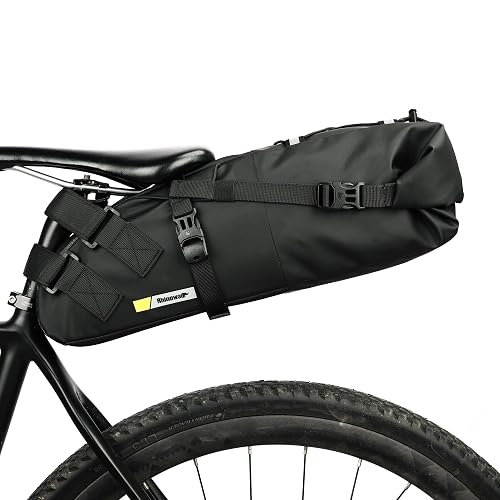 Best for minimalist setupsRhinowalk Waterproof Bike Saddle Bag 10L TPU Under Seat BagView on Amazon
Our Top Picks
Quick Comparison
| Product | Best for | Key feature |
|---|---|---|
| KEMIMOTO Bike Saddle Bag, 13-15L Expandable Waterproof | Overnight and weekend trips | Expandable 13-15L volume with air release valve for compression |
| Waterproof Bike Saddle Bag Large Capacity 15L | Riders carrying bulkier kit | 15L large-capacity main compartment |
| KEMIMOTO Bike Seat Bag, Expandable 11L | Budget-minded riders on shorter trips | Four bottom hardboards for shape retention |
| Rhinowalk Waterproof Bike Saddle Bag 13L | Wet climates and long days in the rain | Roll-top closure, sealed seams and waterproof inner bag |
| Rhinowalk Waterproof Bike Saddle Bag 10L | Lightweight, fast-packing setups | Compact 10L roll-top with anti-slip pad and tail light hook |
KEMIMOTO Bike Saddle Bag, 13-15L Expandable Waterproof Bikepacking Seat Bag
Air Release Valve for Compression, PVC Reflective Panels, Fits Road, MTB, E-Bikes, Touring, Commuter & Gravel Bikes KEMIMOTO Bike Saddle Bag, 13-15L Expandable Waterproof Bikepacking Seat Bag
Best for: Overnight and weekend trips where you want one bag to cover clothing, a sleeping layer and snacks.
This bag suits riders who want a flexible middle-size option. The expandable design lets you run it fuller when you need space and tighten it down when your load is light, which keeps contents from shifting on rough pavement or gravel.
Key specs
- Listed capacity range of 13 to 15 liters
- Expandable body with an air release valve for compression
- PVC reflective panels for low-light visibility
- Designed for road, mountain, e-bike, touring, commuter and gravel bikes
Pros
- Expansion range covers both light and heavier loads
- Air release valve helps compress soft gear
- Reflective panels add visibility on dusk rides
Cons
- Expansion means the bag looks different when full versus empty, so it can feel bulky when only partly loaded
- Owners often note that heavier loads need a secure strap setup to avoid swing
Bottom line: A strong default for riders who want one adaptable seat bag for weekend trips and do not want to buy two sizes.
Waterproof Bike Saddle Bag Large Capacity 15L Bikepacking Bicycle Seat Bag
Waterproof Bike Saddle Bag Large Capacity 15L Bikepacking Bicycle Seat Bag for Road Mountain
Best for: Riders carrying bulkier items such as a warm layer, a tent fly or camp shoes in addition to clothing.
This is the larger-volume option in the group. If your kit regularly overflows a 10 or 11 liter bag, this model gives you more room without moving to a full frame-bag layout.
Key specs
- Listed capacity of 15 liters
- Marketed as waterproof for road and mountain bikes
- Bikepacking-style seat bag mount
Pros
- Generous volume for multi-day clothing and camp items
- Single main compartment keeps packing simple
- Good match for riders who already run a dropper post with space to spare
Cons
- Larger bags can contact the rear tire on full suspension frames, so check clearance
- Heavier loads increase sway, which owners often address with additional strapping
Bottom line: Best for riders whose gear list is long and who have confirmed their frame and wheel clearance at full compression.
KEMIMOTO Bike Seat Bag, Expandable 11L Water Resistant Saddle Pouch
Bikepacking Road Bicycle Rear Pack Under Seat with PVC Reflective Panel & Four Bottom Hardboards KEMIMOTO Bike Seat Bag, Expandable 11L Water Resistant Saddle Pouch
Best for: Budget-minded riders making their first bikepacking trip on a road or gravel bike.
The 11-liter expandable design is a practical middle ground for riders who are still learning what they actually need to carry. It is a lower-commitment way to test a seat-bag setup before investing in larger luggage.
Key specs
- Listed capacity of 11 liters, expandable
- Water-resistant construction
- Four bottom hardboards to help the bag hold its shape
- PVC reflective panel
Pros
- Hardboards keep the bag from collapsing onto the tire
- Compact enough for lighter road and gravel bikes
- Budget-friendly entry point in this category
Cons
- Water resistance is not the same as full waterproofing, so pack a dry bag for sleeping gear
- Smaller volume limits multi-day kit unless you travel light
Bottom line: A sensible first seat bag for riders testing the format on shorter routes before committing to a larger system.
Rhinowalk Waterproof Bike Saddle Bag 13L TPU Under Seat Bag
13L Roll-top Bikepacking Saddle Bag, Waterproof Inner Bag, Sealed Seams, Anti-slip Pad, Tail Light Hook, Reflective Rhinowalk Waterproof Bike Saddle Bag 13L TPU Under Seat Bag for Road/MTB
Best for: Riders in wet climates or on routes where rain and road spray are a regular concern.
This roll-top design relies on sealing rather than a zipper, which is why it appeals to riders who expect long stretches in bad weather. The 13-liter volume sits between the compact and large options in this list.
Key specs
- Listed capacity of 13 liters
- Roll-top closure with sealed seams
- Waterproof inner bag included
- Anti-slip pad and tail light hook
- TPU material with reflective elements
Pros
- Roll-top closure is generally more water-resistant than a zipper
- Inner bag protects sleeping gear and electronics
- Tail light hook helps with rear visibility
Cons
- Roll-top bags need to be rolled tightly each time, which adds a minute to packing
- Access to items at the bottom can be slower than with a side-opening design
Bottom line: The best fit in this group for riders who prioritize keeping contents dry over quick access.
Rhinowalk Waterproof Bike Saddle Bag 10L TPU Under Seat Bag
10L Roll-top Bikepacking Saddle Bag, Waterproof Inner Bag, Sealed Seams, Anti-slip Pad, Tail Light Hook, Reflective Rhinowalk Waterproof Bike Saddle Bag 10L TPU Under Seat Bag for Road/MTB
Best for: Lightweight, fast-packing setups where you carry only a few essentials.
The 10-liter version shares the roll-top and sealed design of its 13-liter sibling but trims the volume for riders who have already pared their kit down. It is a natural match for ultralight-leaning trips and gravel loops.
Key specs
- Listed capacity of 10 liters
- Roll-top closure with sealed seams
- Waterproof inner bag included
- Anti-slip pad and tail light hook
Pros
- Compact profile clears tires and heel more easily
- Same waterproof build as the larger model
- Pairs well with a handlebar or frame bag for split loading
Cons
- Limited space for a sleeping bag plus clothing on multi-day trips
- Owners sometimes need a second bag to carry food and spare layers
Bottom line: A good choice for riders building a minimalist kit or splitting gear across several bags.
Buying Guide
Capacity and how much gear you really carry
Start with a list of what you need to carry each night, then measure it. A 10 to 11 liter bag suits a light kit with a compact sleeping system and minimal clothing. A 13 to 15 liter bag handles a full overnight kit with room for food. Bags larger than that often need a second mounting point or a frame bag to stay stable.
Good picks for this: Rhinowalk Waterproof Bike Saddle Bag 10L TPU Under Seat Bag, KEMIMOTO Bike Saddle Bag 13-15L
Waterproofing and closure style
Roll-top closures with sealed seams generally keep water out better than zippered bags, especially in heavy rain. Zippers are quicker to access but are more vulnerable to water entry if the bag is pushed hard on rough terrain. If you ride in wet climates, favor roll-top designs and still pack sleeping gear in an inner dry bag.
Good picks for this: Rhinowalk Waterproof Bike Saddle Bag 13L TPU Under Seat Bag, Waterproof Bike Saddle Bag Large Capacity 15L
Mounting and frame clearance
Measure the distance from your saddle rails to the rear tire at full compression, and check the heel clearance when you pedal. Many seat bags sit close to the wheel, so a bag that looks fine on the stand can rub on a loaded suspension bike. Use a strap system that keeps the bag from sliding forward or sideways.
Good picks for this: KEMIMOTO Bike Seat Bag Expandable 11L, Rhinowalk Waterproof Bike Saddle Bag 10L TPU Under Seat Bag
Rigidity and shape retention
A bag that collapses onto the tire will rub, sway and wear faster. Look for bottom hardboards or a structured base that keeps the bag shape stable as it is loaded and unloaded. Stable bags also make it easier to pack consistently, which helps with balance.
Good picks for this: KEMIMOTO Bike Seat Bag Expandable 11L, Waterproof Bike Saddle Bag Large Capacity 15L
Expansion and compression
An expandable body lets you adjust volume to your load. An air release valve or compression straps help reduce shifting and keep the bag narrow when you are carrying less. Compressing the bag also reduces sway, which is one of the most common complaints riders have about seat bags.
Good picks for this: KEMIMOTO Bike Saddle Bag 13-15L Expandable, KEMIMOTO Bike Seat Bag Expandable 11L
Visibility and night safety
Reflective panels and a tail light attachment point improve visibility on roads and shared paths. Pair a bag with a rear light regardless of reflectivity, and check that the light mount does not interfere with the bag closure or strap positions.
Good picks for this: Rhinowalk Waterproof Bike Saddle Bag 13L TPU Under Seat Bag, KEMIMOTO Bike Saddle Bag 13-15L Expandable
Care and durability
Rinse saddle bags after rides in grit or salt, and let them dry fully before storing to avoid odor and material breakdown. Inspect straps and mounting points before long trips, and check that roll-top seams are clean and free of debris that could prevent a tight seal.
Good picks for this: Rhinowalk Waterproof Bike Saddle Bag 10L TPU Under Seat Bag, Waterproof Bike Saddle Bag Large Capacity 15L
FAQ
What size saddle bag do I need for bikepacking?
For a light overnight kit, 10 to 11 liters is often enough. For a full overnight setup with food and extra layers, 13 to 15 liters is more practical. Multi-day trips usually require a combination of seat, frame and handlebar bags rather than one large seat bag.
Are saddle bags waterproof?
It depends on the construction. Roll-top designs with sealed seams resist water well, while zippered bags are water-resistant but may let moisture in during heavy rain. Packing sleeping gear and electronics in an inner dry bag adds a second layer of protection.
Will a saddle bag rub my tire?
It can, particularly on full suspension bikes or with wide tires. Check clearance at full compression and under load, and use straps to limit side-to-side movement. A shorter or more rigid bag reduces the chance of contact.
Can I use a saddle bag with a dropper seatpost?
Many riders do, but you need to confirm that the bag does not interfere with the post’s travel or cable routing. Mount the bag so that it sits clear of the post collar and does not pinch the cable or hydraulic line when the post is lowered.
How do I keep a saddle bag from swaying?
Pack heavier items low and close to the center, use the bag’s compression straps, and keep the bag mounted snugly. A bag that is over-full or loosely strapped will sway more on rough surfaces and when you stand up to climb.
Should I consult a professional before a long tour?
For major route planning, bike fit changes or load-bearing modifications, consider speaking with a qualified bike shop or fitter. They can check frame clearance, saddle height and weight distribution in person.
Conclusion
The best saddle bags for bikepacking depend on load size, weather exposure and frame clearance. The KEMIMOTO 13-15L expandable bag is a versatile default for weekend trips. The 15L large-capacity bag suits riders with bulkier kits who have confirmed clearance. The 11L KEMIMOTO pouch is a practical first step for budget-minded riders. For wet climates, the 13L Rhinowalk roll-top is the most weather-focused option, while the 10L Rhinowalk suits minimalist setups. Match the volume to your real packing list, check your frame clearance, and consider a dry inner bag for sleeping gear regardless of which bag you choose.
For more on building a complete setup, see Best Handlebar Bags Bikepacking: 6 Styles and Sizes Compared (2026), 6 Best Frame Bags for Bikepacking (2026) and Touring Bike Bags: Panniers, Trailers and Frame Bags.
Sources
- Product safety guidance on reflective materials and rear lighting for cycling in low-light conditions (cpsc.gov)
- Road safety guidance for cyclists sharing roadways, including visibility recommendations (nhtsa.gov)
- Technical reference on bicycle mounting, clearance and rack and bag fitting
Related reading
- 6 Best Handlebar Bags for Bikepacking Picks Compared (2026)
- 7 Best E-Bikes for Bikepacking: Our Picks Compared (2026)
- 6 Best Voile Straps for Bikepacking: Compared and Explained
- 6 Best Bikepacking Full Suspension Bikes for Rough Terrain (2026)
About Claire Whitaker
Claire Whitaker is part of our editorial team and reviews and edits our bike touring & bikepacking guides, checking product details against manufacturer specifications and owner feedback.