 By Colin Foster
Updated November 2026
Choosing a fat bike for bikepacking comes down to three things: whether the tires can handle loose sand, snow or rocky doubletrack, whether the frame and components can survive a loaded trip, and whether the bike fits your body and your budget for upkeep. This list compares six fat-tire mountain bikes sold on Amazon US. The selection is based on published specifications, brand reputation and patterns in owner feedback, not on hands-on testing. Every pick has a 26-inch wheel and a wide tire, so you can judge how well each one matches your terrain and load.
Our top picks at a glance
- 1
 TOP CHOICEBest overallOutroad Fat Tire Mountain Bike with 26 inch WheelsView on Amazon
- 2
 TOP CHOICEBest for heavy riders26 Inch Fat Tire Mountain Bike, 21-Speed 4-Inch Tide Tires Dual Disc BView on Amazon
- 3
 TOP CHOICEBest for shimano drivetrain fansFront Suspension Shimano Men's Mountain Bike for Adults with Dual DiscView on Amazon
- 4
 Best budget pickMongoose Dolomite Fat Tire Mens Mountain BikeView on Amazon
- 5
 Best for riders who want a sizing rangeMongoose Argus Trail or ST Fat Tire Mountain Bike, 20, 24 or 26 Inch BView on Amazon
- 6
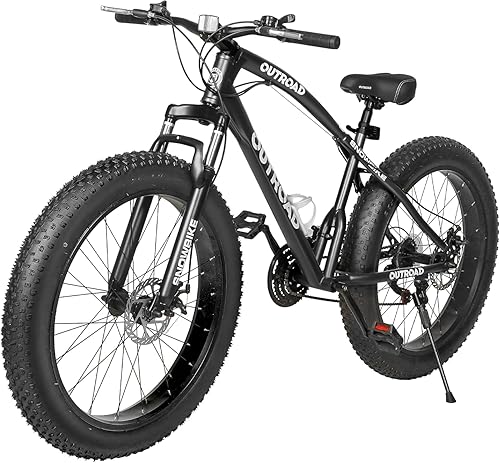 Best for front-suspension trail milesOutroad Mountain Bike Fat Tire with 4-Inch Tire 26 inch Wheels, 21 SpeView on Amazon
Our Top Picks
Before you read the individual reviews, it helps to know what a bikepacking fat bike has to do. You will carry a frame bag, a seat bag and sometimes handlebar gear, often 15 to 25 pounds of load on top of your own weight. Wide tires add rolling resistance on pavement, but on sand, snow or soft dirt they keep you moving when a standard mountain bike would stall. A rigid or front-suspension fork, a steel or high-carbon frame that handles extra weight, and mechanical disc brakes you can service on the road are all useful traits for this kind of riding.
Quick Comparison
| Product | Best for | Key feature |
|---|---|---|
| Outroad Fat Tire Mountain Bike with 26 inch Wheels | All-round bikepacking on mixed terrain | 21 speeds, double disc brakes, front suspension |
| 26 Inch Fat Tire Mountain Bike, 21-Speed 4-Inch Tide Tires | Heavier riders and loaded touring | 400 lb rated capacity listed |
| Front Suspension Shimano Men’s Mountain Bike | Riders who value Shimano parts | Shimano-branded drivetrain and dual disc brakes |
| Mongoose Dolomite Fat Tire Mens Mountain Bike | Budget-minded first fat bike | Simple, widely serviced parts |
| Mongoose Argus Trail or ST Fat Tire Mountain Bike | Riders needing a specific frame size | Multiple wheel and frame size options |
| Outroad Mountain Bike Fat Tire with 4-Inch Tire | Sand, snow and soft surfaces | 4-inch tires with front suspension |
Outroad Fat Tire Mountain Bike with 26 inch Wheels
Outroad Fat Tire Mountain Bike with 26 inch Wheels, 21 Speed with High Carbon Steel Frame, Double Disc Brake and Front Suspension Anti-Slip Bikes
Best for: All-round bikepacking on mixed terrain
This is a sensible choice for riders who want one bike to handle gravel, dirt roads and the occasional sandy wash. The listing describes a high-carbon steel frame, which tends to be more forgiving under load than thin aluminum and is easier to repair in remote areas.
Key specs
- 26-inch wheels
- 21 speeds
- Double disc brakes
- Front suspension fork
- High-carbon steel frame
Pros
- Steel frame suits rack and bag mounting on longer trips
- Double disc brakes give consistent stopping on descents
- Front suspension takes the edge off rough doubletrack
Cons
- Heavier than aluminum options, which matters on steep climbs
- Stock tires are knobby, so pavement stretches feel slow
Bottom line: A good first pick for riders who want a versatile fat bike that can carry gear over mixed surfaces.
26 Inch Fat Tire Mountain Bike, 21-Speed 4-Inch Tide Tires Dual Disc Brake Bicycle with Suspension Fork, Heavy-Duty 400lb Mountain Bike for Big & Tall Riders
26 Inch Fat Tire Mountain Bike, 21-Speed 4-Inch Tide Tires Dual Disc Brake Bicycle with Suspension Fork, Heavy-Duty 400lb Mountain Bike for Big & Tall Riders
Best for: Heavier riders and loaded touring
The listing names a 400-pound capacity and 4-inch tires, which makes it a fit for riders whose body weight plus gear would stress lighter frames. Check the stated capacity against your total load before buying, including water and food.
Key specs
- 26-inch wheels with 4-inch tires
- 21 speeds
- Dual disc brakes
- Suspension fork
- 400 lb listed capacity
Pros
- Stated capacity leaves room for heavy loads
- Wide tires float over soft sand and snow
- Dual disc brakes suit loaded descents
Cons
- Wide tires add rolling resistance on paved sections
- Heavier overall, so climbing takes more effort
Bottom line: Best for riders who need a higher weight rating and plan to spend time off pavement.
Front Suspension Shimano Men’s Mountain Bike for Adults with Dual Disc Brake & High-Carbon Steel Frame, 26 Inch Fat Tire Mountain Bikes for Men/Women, 21 Speed MTB Bike
Front Suspension Shimano Men's Mountain Bike for Adults with Dual Disc Brake & High-Carbon Steel Frame, Bicycle for Men 26 Inch Fat Tire Mountain Bikes for Men/Women, 21 Speed MTB Bike
Best for: Riders who value Shimano parts
Shimano drivetrains are widely stocked at bike shops and along popular touring routes, which makes replacement cassettes and derailleurs easier to find. This model pairs that familiarity with a high-carbon steel frame and a front fork.
Key specs
- 26-inch fat tires
- 21 speeds
- Dual disc brakes
- Front suspension
- High-carbon steel frame
Pros
- Shimano components are broadly serviceable
- Steel frame handles rack and bag loads
- Front suspension and wide tires work well on gravel
Cons
- Shimano-based gearing may need adjustment for very steep loaded climbs
- Limited detail in the listing about exact component grades
Bottom line: A reasonable pick for riders who want familiar, easy-to-service parts on a fat bike for multi-day trips.
Mongoose Dolomite Fat Tire Mens Mountain Bike
Mongoose Mongoose Dolomite Fat Tire Mens Mountain Bike
Best for: Budget-minded first fat bike
Mongoose is a long-established bicycle brand, and its simpler fat bikes are common at general bike shops. This is a practical starting point if you are not yet sure how much bikepacking you will do.
Key specs
- Fat tire 26-inch format
- Men’s frame geometry
Pros
- Brand has wide dealer and parts availability
- Simple layout is easy to maintain at home
- Good entry point for learning fat bike handling
Cons
- Fewer published specifications than some competitors
- Entry-level components may need upgrades for long tours
Bottom line: Suits riders who want a dependable, low-commitment fat bike to test the format before investing more.
Mongoose Argus Trail or ST Fat Tire Mountain Bike, 20, 24 or 26 Inch Bike for Kids and Adults, 7 or 16 Speed, Aluminum or Steel Frame, Knobby Mountain Fat Tires, Mechanical Disc Brakes
Mongoose Argus Trail or ST Fat Tire Mountain Bike, 20, 24 or 26 Inch Bike for Kids and Adults, 7 or 16 Speed, Aluminum or Steel Frame, Knobby Mountain Fat Tires, Mechanical Disc Brakes
Best for: Riders needing a specific frame size
The Argus line is offered in several wheel sizes and frame materials, so you can match the bike to your height and preference for steel or aluminum. Confirm which variant you are buying from the listing before you check out.
Key specs
- 20, 24 or 26-inch wheel options
- 7 or 16 speeds
- Aluminum or steel frame
- Knobby fat tires
- Mechanical disc brakes
Pros
- Several sizing options help with fit
- Steel and aluminum choices suit different priorities
- Mechanical disc brakes are simple to adjust in the field
Cons
- Seven-speed versions have a narrower gear range for climbing with gear
- Mechanical discs need more regular adjustment than hydraulic ones
Bottom line: A good match for riders who need a specific frame size or want to choose between steel and aluminum.
Outroad Mountain Bike Fat Tire with 4-Inch Tire 26 inch Wheels, 21 Speed with High Carbon Steel Frame, Double Disc Brake and Front Suspension Anti-Slip Bikes
Outroad Mountain Bike Fat Tire with 4-Inch Tire 26 inch Wheels, 21 Speed with High Carbon Steel Frame, Double Disc Brake and Front Suspension Anti-Slip Bikes
Best for: Sand, snow and soft surfaces
The 4-inch tire format gives the most float on loose surfaces, which suits desert washes and winter routes. The trade-off is weight and rolling resistance on hard surfaces.
Key specs
- 26-inch wheels with 4-inch tires
- 21 speeds
- High-carbon steel frame
- Double disc brakes
- Front suspension
Pros
- Wide tires keep traction on sand and snow
- Steel frame and front suspension suit loaded riding
- Double disc brakes add control on descents
Cons
- Heavy and slower on pavement
- Wide tires need regular pressure checks for best results
Bottom line: Best for riders whose routes include deep sand or snow and who accept slower paved progress.
Buying Guide
Tire width and terrain
Fat tires range from roughly 3.8 to 5 inches in common listings. Wider tires float better on sand and snow but cost you speed on pavement. If most of your route is gravel and dirt, 4-inch tires are a reasonable middle ground. If you expect mostly pavement, a narrower bike will serve you better.
Good picks for this: Outroad Fat Tire Mountain Bike with 26 inch Wheels, Outroad Mountain Bike Fat Tire with 4-Inch Tire
Frame material and rack compatibility
Steel frames flex slightly and tolerate heavy loads well, and they are easier to repair in the field. Aluminum frames are lighter but can be less forgiving when carrying a full load. Check whether the frame has mounts for a rear rack, bottle cages and frame bags before you buy.
Good picks for this: Front Suspension Shimano Men’s Mountain Bike, Mongoose Argus Trail or ST Fat Tire Mountain Bike
Weight capacity
Add your body weight, the weight of your gear and the weight of water to the bike’s listed rated capacity. Keep a margin, since the bike will feel less responsive when near its limit. Check the manufacturer’s stated maximum before buying, and if you are unsure, contact the seller.
Good picks for this: 26 Inch Fat Tire Mountain Bike with 4-Inch Tide Tires, Outroad Mountain Bike Fat Tire with 4-Inch Tire
Drivetrain and gearing
Twenty-one speeds give a wide enough gear range for most loaded climbs. Seven-speed setups are simpler but may leave you spinning or grinding on steep grades with a full load. Shimano and other widely supported drivetrains are easier to service on long trips.
Good picks for this: Front Suspension Shimano Men’s Mountain Bike, Outroad Fat Tire Mountain Bike with 26 inch Wheels
Brakes and stopping power
Double disc brakes give more consistent stopping when loaded. Mechanical discs are simpler to adjust with basic tools but need more frequent tuning than hydraulic systems. Choose the type you can maintain yourself.
Good picks for this: Mongoose Argus Trail or ST Fat Tire Mountain Bike, Outroad Fat Tire Mountain Bike with 26 inch Wheels
Size and fit
Standing over the top tube should leave a few inches of clearance, and your reach should allow a relaxed but controlled position. Fat bikes often have longer wheelbases, so a size that feels right on a standard mountain bike may feel different. Test ride when possible.
Good picks for this: Mongoose Argus Trail or ST Fat Tire Mountain Bike, Mongoose Dolomite Fat Tire Mens Mountain Bike
Serviceability and long-term care
Wide tires, sealed bearings and simple drivetrains are easier to keep running on the road. Carry a spare tube, a tire plug kit and a basic multitool, and check spoke tension and bolt torque before each trip. Bike maintenance is a skill, and a local shop can help you learn the basics.
Good picks for this: Mongoose Dolomite Fat Tire Mens Mountain Bike, Front Suspension Shimano Men’s Mountain Bike
FAQ
Is a fat bike good for bikepacking?
Yes, for routes that include sand, snow, soft dirt or rough doubletrack. On mostly paved routes, a lighter gravel or hardtail bike usually covers ground faster. Fat bikes trade speed on pavement for traction and stability off it.
How much weight can a fat bike carry for bikepacking?
It depends on the bike. Check the manufacturer’s rated capacity, which is often listed in the specifications. Remember to include your body weight, gear, water and food in the total, and leave a margin below the stated limit.
Are fat tires slower on pavement?
Generally yes. Wide, knobby tires have more rolling resistance than narrower road or gravel tires. You can reduce the penalty by choosing smoother tread and running the correct tire pressure for your load and surface.
Should I get a steel or aluminum frame for bikepacking?
Steel tends to tolerate heavy loads and is easier to repair in remote areas. Aluminum is lighter and often less expensive to ship, but it can be less forgiving under sustained weight. Either can work well if the frame is rated for your load and has the right mounts.
Do I need front suspension on a fat bike for bikepacking?
Not always. Front suspension helps on rough, rocky or washboard surfaces and takes some fatigue out of long days. On smooth gravel or sand, a rigid fork keeps the bike lighter and simpler. Consider the terrain you expect most often.
Can I use a fat bike for regular commuting too?
Yes, though the wide tires add effort on pavement. If you plan to commute as well as tour, you may want to swap to narrower tires for road use and keep the fat tires for off-road trips. Confirm that the frame and brakes accept the tire sizes you plan to use.
Conclusion
For most riders, the Outroad Fat Tire Mountain Bike with 26 inch Wheels is a balanced place to start, combining steel construction, double disc brakes and front suspension. If you are a heavier rider or carry a large load, the 26 Inch Fat Tire Mountain Bike with a 400 lb listed capacity deserves a close look. Riders focused on sand and snow should consider the 4-inch tire Outroad model, while budget-minded beginners may prefer the Mongoose Dolomite. Check the specifications against your own weight, terrain and maintenance comfort before you decide.
If you are still weighing bike types, see 7 Best Hardtail Mountain Bikes for Bikepacking Picks in 2026 and 7 Best Flat Bar Bikepacking Bikes for Rough Roads and Long Miles for alternatives. For bags and carrying options, read Touring Bike Bags: Panniers, Trailers and Frame Bags, and for a first setup walkthrough, see Trek Checkpoint Bikepacking Setup: A Step-by-Step Guide for Beginners. A pre-trip check is covered in Pre-Ride Inspection for Touring Bikes.
Sources
- Consumer safety guidance on bicycle equipment and recalls (cpsc.gov)
- Trail and backcountry travel guidance for remote routes (nps.gov)
- Information on soil, sand and terrain conditions relevant to route planning (usda.gov)
About Colin Foster
Colin Foster is part of our editorial team and reviews and edits our bike touring & bikepacking guides, checking product details against manufacturer specifications and owner feedback.