By Colin Foster
Updated November 2026
Choosing a hardtail mountain bike for bikepacking means balancing three things: a frame that carries a load without flexing, gearing that handles loaded climbs, and a fit you can hold for six or eight hours a day across gravel, singletrack and fire road. This list compares seven hardtails sold on Amazon US. The selection rests on listed specifications, brand reputation for frames and components, and patterns owners tend to report about comfort, durability and service. We have not ridden these bikes ourselves, so treat the notes below as a research summary, not a field test.
Our top picks at a glance
- 1
 TOP CHOICEBest overallTommaso Gran Sasso 29er Mountain BikeView on Amazon
- 2
 TOP CHOICEBest for long gravel daysROCKBROS 29 Inch Mountain BikeView on Amazon
- 3
 TOP CHOICEBest for budget-minded riders21 Speed Lightweight Aluminum Frame Mountain BikeView on Amazon
- 4
 Best for a lightweight buildEastern Bikes Alpaka 29" Lightweight MTBView on Amazon
- 5
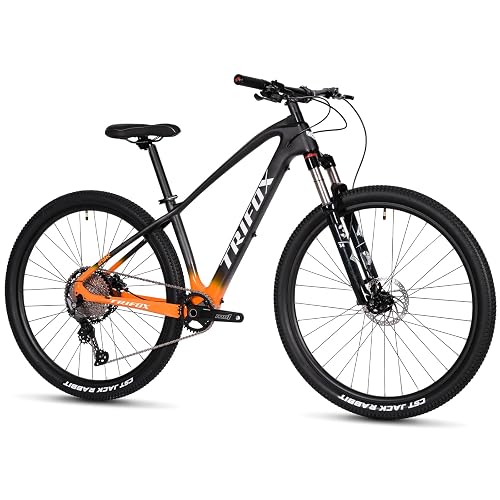 Best for rough, technical terrainCarbon Fiber Mountain Bike with Shimano M6100 DeoreView on Amazon
- 6
 Best for riders who want fat tiresMongoose Argus Trail or ST Fat Tire Mountain BikeView on Amazon
- 7
 Best for suspension comfort on a budgetSAVADECK Titan 612 Carbon Fiber Mountain BikeView on Amazon
Our Top Picks
Before the comparison, a note on terms. A hardtail has a suspension fork and a rigid rear triangle. That rigid rear is the reason it is the usual choice for loaded touring: it keeps the frame predictable with panniers or a frame bag, and it has fewer pivots to service. For background on how bikepacking differs from other styles, see Types of Bike Touring: Credit Card to Bikepacking and Bike Touring vs Bikepacking (2026): Which Is Better for Your Next Trip?
Quick Comparison
| Product | Best for | Key feature |
|---|---|---|
| Tommaso Gran Sasso 29er Mountain Bike | Overall balance | 29-inch wheels with hydraulic disc brakes |
| ROCKBROS 29 Inch Mountain Bike | Long gravel days | 140mm air fork with lockout |
| 21 Speed Lightweight Aluminum Frame Mountain Bike | Budget-minded riders | Aluminum frame with 21 speeds |
| Eastern Bikes Alpaka 29″ Lightweight MTB | Lightweight builds | Hydraulic brakes and four frame sizes |
| Carbon Fiber Mountain Bike with Shimano M6100 Deore | Rough, technical terrain | Carbon frame with 130mm hydraulic fork |
| Mongoose Argus Trail or ST Fat Tire Mountain Bike | Fat-tire traction | Knobby fat tires and mechanical disc brakes |
| SAVADECK Titan 612 Carbon Fiber Mountain Bike | Suspension comfort on a budget | Carbon frame with 12-speed Shimano M6100 |
Tommaso Gran Sasso 29er Mountain Bike
Tommaso Gran Sasso 29er Mounain Bike Hydraulic Disc Hardtail Best Looking MTB
Best for: Overall balance
This suits riders who want a 29-inch hardtail with hydraulic stopping power and a frame that handles a rear rack and bags without fuss. The 29-inch wheel rolls over washboard and roots better than smaller wheels, which matters on long days.
Key specs
- 29-inch wheels
- Hydraulic disc brakes
- Hardtail frame
Pros
- Larger wheels roll more smoothly over rough surfaces
- Hydraulic brakes give consistent stopping with a loaded bike
- Simple rigid rear suits rack and bag mounting
Cons
- Heavier than lightweight alloy builds
- Standard fit may need adjustment for shorter riders
Bottom line: A strong default for riders who want a well-rounded 29er for mixed gravel and trail touring.
ROCKBROS 29 Inch Mountain Bike
Smoother trail control and easier climbing with a 140mm air fork, hydraulic damping, crown lockout, and 29 x 2.2 in tires ROCKBROS 29 Inch Mountain Bike, Shimano Deore 12-Speed, Hydraulic Brakes
Best for: Long gravel days
Riders planning extended gravel stretches will appreciate the listed 140mm air fork with a crown lockout, which lets you firm up the front on smooth climbs and open it up on descents.
Key specs
- 29 x 2.2 in tires
- 140mm air fork with hydraulic damping and crown lockout
- Shimano Deore 12-speed drivetrain with hydraulic brakes
Pros
- Lockout reduces bob on long paved or gravel climbs
- Wide-enough tires for mixed surfaces
- Twelve speeds give a useful climbing range
Cons
- Air forks need periodic pressure checks
- Added front travel adds weight to the front end
Bottom line: Best for riders who expect a lot of gravel and want to tune the front suspension.
21 Speed Lightweight Aluminum Frame Mountain Bike
21 Speed Lightweight Aluminum Frame, Front and Rear Disc Brakes with Full Suspension Comfort Saddle for Outdoor Riding Mountain Bike 26 27.5 Inch MTB Sport Trail Bicycle for Adult Men Women
Best for: Budget-minded riders
This is a practical entry point for someone testing whether bikepacking suits them before committing to a higher-end build.
Key specs
- 21 speeds
- Aluminum frame
- Front and rear disc brakes
Pros
- Aluminum frame is light and corrosion-resistant
- Disc brakes on both wheels
- Full suspension comfort saddle is listed
Cons
- Component tier is basic compared with groupset-level bikes
- Fit and rack mounting should be confirmed before loading
Bottom line: A sensible starting point for riders who want to learn touring on a modest bike.
Eastern Bikes Alpaka 29″ Lightweight MTB
Eastern Bikes Alpaka 29" Lightweight MTB Mountain Bike, 9-Speed, Hydraulic Disc Brakes, Front Suspension Available in 4 Frame Sizes.
Best for: Lightweight builds
Riders who want a lighter hardtail and plan to carry modest loads will find this the most appealing of the group.
Key specs
- 29-inch wheels
- Nine-speed drivetrain
- Hydraulic disc brakes
Pros
- Lighter overall build for climbing
- Four frame sizes help with fit
- Hydraulic brakes for consistent stopping
Cons
- Nine speeds offer a narrower gear range than twelve-speed setups
- Lighter components may wear faster under heavy loads
Bottom line: A good pick for lighter-load touring where weight matters more than the widest gear range.
Carbon Fiber Mountain Bike with Shimano M6100 Deore
Carbon Fiber Mountain Bike with Shimano M6100 Deore Groupset 12-Speed,Carbon Fiber Frame,Hydraulic Fork 130mm Travel,29er Mountain Bike for Adult 17/19 inch
Best for: Rough, technical terrain
This suits riders who expect rocky descents and loose climbs and want a stiff, light carbon frame with substantial front travel.
Key specs
- Carbon fiber frame
- Shimano M6100 Deore 12-speed groupset
- 130mm hydraulic fork, 29-inch wheels
Pros
- Carbon frame is light and vibration-damping
- Hydraulic fork handles rough terrain
- Twelve-speed Deore drivetrain gives a wide range
Cons
- Carbon frames require careful handling around clamps and bags
- Long fork travel adds weight at the front
Bottom line: Pick this if you want a capable rough-terrain hardtail and can keep weight in check.
Mongoose Argus Trail or ST Fat Tire Mountain Bike
Mongoose Argus Trail or ST Fat Tire Mountain Bike, 20, 24 or 26 Inch Bike for Kids and Adults, 7 or 16 Speed, Aluminum or Steel Frame, Knobby Mountain Fat Tires, Mechanical Disc Brakes
Best for: Fat-tire traction
Riders who expect sand, snow or loose surfaces will value the wide knobby tires, though the bike is better suited to shorter trips than fast road-heavy tours.
Key specs
- Knobby fat tires
- Seven or sixteen speeds, depending on model
- Aluminum or steel frame, mechanical disc brakes
Pros
- Fat tires provide traction on soft ground
- Steel frame options are durable and repairable
- Mechanical disc brakes are simple to service
Cons
- Fat tires roll slowly on pavement
- Seven-speed versions have limited climbing range
Bottom line: Best for riders whose route is mostly soft or loose surface and who accept slower rolling speed.
SAVADECK Titan 612 Carbon Fiber Mountain Bike
SAVADECK Titan 612 Carbon Fiber Soft Tail Mountain Bike – All-Terrain Suspension, Off-Road Racing, M6100 12-Speed for Adults
Best for: Suspension comfort on a budget
This suits riders who want carbon construction and a Shimano M6100 drivetrain at a lower tier. Note that the listing names a soft-tail design, which has rear suspension and a different feel from a true rigid-rear hardtail; confirm the frame type before deciding.
Key specs
- Carbon fiber frame
- Shimano M6100 12-speed drivetrain
- All-terrain suspension
Pros
- Carbon frame keeps weight down
- Twelve speeds with the M6100 groupset
- Rear suspension can soften rough ground
Cons
- Rear suspension adds pivots and maintenance
- Rack and bag mounting may be less straightforward than on a rigid frame
Bottom line: A fit for riders who prefer rear suspension and accept a little extra upkeep, though it departs from a classic hardtail.
Buying Guide
Frame Material and Weight
Aluminum frames are common on touring hardtails because they balance weight, stiffness and cost. Carbon saves grams and damps vibration but needs care around clamps. Steel is durable and repairable, though heavier. Check the listed frame material and total weight, and remember that loaded weight will exceed the bare bike.
Good picks for this: 21 Speed Lightweight Aluminum Frame Mountain Bike, Eastern Bikes Alpaka 29″ Lightweight MTB
Wheel Size and Tires
29-inch wheels roll over obstacles more easily and tend to hold momentum on gravel. Tire width matters too: wider rubber adds comfort and traction, while fat tires trade speed for flotation. Check tire width and whether the frame has clearance for fenders or wider tires.
Good picks for this: Tommaso Gran Sasso 29er Mountain Bike, ROCKBROS 29 Inch Mountain Bike
Drivetrain and Gear Range
Loaded climbing rewards a low gear. Twelve-speed drivetrains generally offer a wider range than seven- or nine-speed setups. Count the listed speeds and look at the cassette range if the listing gives it.
Good picks for this: ROCKBROS 29 Inch Mountain Bike, Carbon Fiber Mountain Bike with Shimano M6100 Deore
Brakes
Disc brakes are the norm for loaded descending. Hydraulic systems self-adjust and give more consistent modulation than mechanical ones, which helps with a heavy bike. Check whether brakes are listed as hydraulic or mechanical.
Good picks for this: Tommaso Gran Sasso 29er Mountain Bike, Mongoose Argus Trail or ST Fat Tire Mountain Bike
Fit and Frame Size
Fit matters more than any single component. Check stand-over clearance, reach and seat tube length against your height. Bikes with multiple frame sizes make it easier to find a fit that holds for multi-day riding. Ask a local bike shop to confirm sizing before you commit.
Good picks for this: Eastern Bikes Alpaka 29″ Lightweight MTB, 21 Speed Lightweight Aluminum Frame Mountain Bike
Rack and Bag Mounting
A rigid rear triangle with rack eyelets makes it simpler to mount a rear rack and panniers. Confirm eyelets, fork mounts and frame bag clearance. Rear suspension can complicate rack mounting and bag fit.
Good picks for this: Tommaso Gran Sasso 29er Mountain Bike, SAVADECK Titan 612 Carbon Fiber Mountain Bike
Durability and Care
Touring puts sustained stress on wheels, bottom brackets and spokes. Look at the frame and component tier, and plan for regular maintenance: cleaning the drivetrain, checking spoke tension and inspecting brake pads. Carbon frames should be inspected for damage after any crash.
Good picks for this: Mongoose Argus Trail or ST Fat Tire Mountain Bike, Carbon Fiber Mountain Bike with Shimano M6100 Deore
FAQ
What makes a hardtail better than a full-suspension bike for bikepacking?
A hardtail has a rigid rear triangle, which keeps the frame predictable with loaded bags and gives you fewer pivots to maintain. Full-suspension bikes absorb more bumps but add weight and servicing. Many touring riders prefer the simpler setup for long routes.
Do I need 29-inch wheels for bikepacking?
Not strictly, but 29-inch wheels roll more smoothly over rough surfaces and hold speed well on gravel. Smaller wheels can be more agile and easier to fit to smaller riders. Choose based on your terrain and frame size.
How many gears should a touring hardtail have?
A wider range helps on loaded climbs. Twelve-speed drivetrains generally give more low-gear options than seven- or nine-speed setups, which matters when you carry extra weight.
Are hydraulic brakes worth it for loaded riding?
Hydraulic disc brakes self-adjust and tend to give more consistent stopping power, which is helpful on a heavy bike descending steep grades. Mechanical discs are simpler to service in remote areas.
Can I add a rear rack and panniers to any hardtail?
Not always. Check for rack eyelets, clearance for the tire and chainstay, and the rack’s rated load. Rear suspension frames can complicate rack and bag mounting, so confirm before buying.
Should I have a bike fit before a long tour?
Yes, if you can. A professional bike fitter or experienced shop can adjust saddle height, reach and handlebar position. Long days amplify small fit problems, so it is worth a check. Consult a qualified bike fitter for personal fit advice.
Conclusion
For most riders the Tommaso Gran Sasso 29er is the most balanced default, with 29-inch wheels and hydraulic brakes. Choose the ROCKBROS 29 for long gravel days where front suspension adjustment helps, and the 21 Speed Lightweight Aluminum Frame bike if budget is the main constraint. The Eastern Bikes Alpaka suits lighter loads, while the carbon Shimano M6100 model fits rough terrain. The Mongoose fat-tire bike is best for soft surfaces, and the SAVADECK is worth considering if you want rear suspension, understanding it differs from a classic hardtail. Match the bike to your route, load and fit, and confirm specs in the listing before buying.
Sources
- Consumer safety guidance on bicycle equipment and safe riding practices (cpsc.gov)
- Trail and route information for planning off-road riding on public lands (nps.gov)
- Information on terrain, soils and trail surfaces relevant to route planning (usda.gov)
Related reading
About Colin Foster
Colin Foster is part of our editorial team and reviews and edits our bike touring & bikepacking guides, checking product details against manufacturer specifications and owner feedback.